


Five key steps that can ensure variations don’t drain the profitability out of a project.
Variations are an inevitable aspect of construction projects. Very few projects are completed without any changes being requested or enforced. Unfortunately, the sheer diversity of variations can make it difficult to predict in advance which issues (if any) might arise during a project’s lifespan.
Before the recession, many companies hoped that they could raise additional profit and revenue from variations in awarded contracts, but without system controls in place realising this more often than not backfired. Here and now in 2014, this risky strategy has become less commonplace. Companies need to be far more prudent with their finances and this article considers five ways that variation orders in construction projects can be managed.
1. Plan in advance
Forecast revenue and actual revenue can be two very different things and the importance of comprehensive budgeting at the outset cannot be overstated. Nor can the benefits of putting in place a standard construction contract that makes provisions for what happens in the event of disputes or additional expenditure. Variation clauses should always be incorporated, even with friendly clients where communication may often be informal or conducted socially. Any such discussions must be recorded, with changes acknowledged and integrated into subsequent processes, rather than simply being a verbal variation that could lead to disputes.
Potential issues will vary from project to project, and the standard forms cover many obvious or likely circumstances. However, there are other areas where variations may arise and it’s as well to prepare for these insofar as possible:
- What happens if a prolonged period of bad weather delays a project? Is there any scope to accelerate future stages of work to catch up, or can additional people be brought in to prevent any projected over-runs?
- What will happen if a third-party is unable to deliver required information, such as a site survey or sign-off document? Whose responsibility will any subsequently incurred delays or losses be?
- Are all parties clear about what happens if an unexpected on-site discovery causes a hold-up to the schedule? These complications can range from the mundane (an outlet pipe not shown on the site plans) to the completely unpredictable (the discovery of a medieval king’s remains underneath a council car park). While the latter would have been impossible to anticipate, it is possible to create contingency plans if unexpected items in the ground cause knock-on delays.
2. Check the figures as often as possible
It might be difficult to monitor a project’s progress on a daily basis, but this is the timeframe in which cost variations take place. These variations will become all too apparent at the end of a job if they haven’t been handled correctly, so it’s crucial to know about (and react to) variations in construction projects as they happen. It’s no good waiting until a complicated and outdated spreadsheet is retrospectively assembled from multiple sources by someone with limited information at their disposal. By that point, it’ll be too late to respond to changes in the project’s costs and profit margins.
3. Monitor sub-contractor behaviour
With the 2014 Budget showing a better-than-expected improvement in the UK’s economic growth and introducing plenty of new investment across the construction industry, the market is looking increasingly healthy. However, after six years of economic hardship, some companies continue to struggle. You should look for untoward delays in suppliers delivering or in subcontract performance; this is often the first sign of a company in distress.
Variations can be triggered when a subcontractor or supplier is unable to honour their agreements, often leading to a scramble to find a replacement contractor and leaving firms in a weak position when it comes to negotiating a new deal. If it is a nominated subcontractor then that could lead to a variation if it as a domestic subcontractor then the contractor needs to set about mitigating the risk as quickly as possible. Advanced warning of erratic sub-contractor behaviour may signal the need to research alternative providers.
4. Be prepared for late costs
We all know that late costs can be the sting in the tail of many construction projects, they often arrive at a time when thoughts are already turning to the next contract but they often result from problems earlier in the contract and only come to light as the project draws to a close. If these costs haven’t been identified or managed early enough in the project, they can eliminate profitability, resulting in a job completed at cost, or even at a loss. That’s especially true given continued irresponsible bidding often resulting in the tight margins of the post-recession market, and fixed price contracts are particularly susceptible to loss-incurring additional costs.
5. Don’t presume variations will deliver a profit
It is naturally tempting to quote a low price for a project to ensure the work is awarded, before entrusting the profit margin to probable variations. This is a very risky approach, effectively gambling a project’s viability on future events. Variation orders in construction projects can be a company’s best friend, but they can also be its worst enemy.
Ensure that any variations are notified, costed and passed onto the client as soon as possible, in full and with a small margin on top. This may sound like common sense, but many companies manage variations badly, failing to pass on updated expenses to the client and effectively losing money on each variation. Firms with poor financial software don’t always record these changes at the time, leading to nasty shocks at final account time.
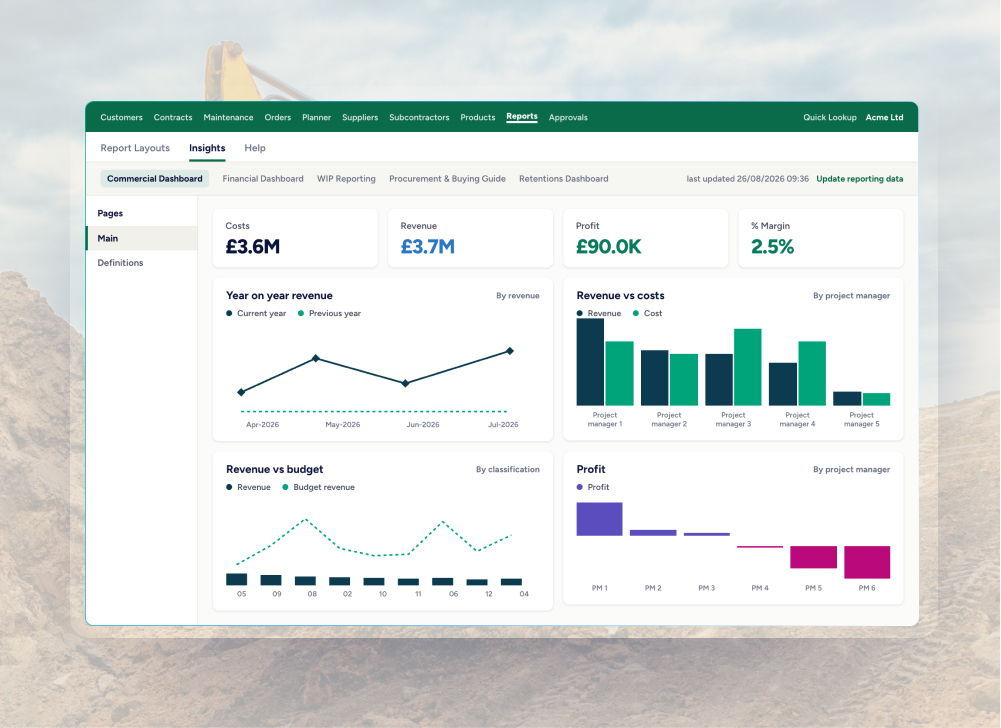
All these issues can be successfully managed and budgeted for by employing the right construction management software. Transparency in budgeting and accounting is essential for monitoring a project throughout its lifespan, enabling instant identification of overspend or unpaid bills. The best construction management software packages will combine financial, purchasing, contract costing, payroll and subcontractor details into a single place, enabling budgets to be constantly scrutinised and updated in real-time.
Discover how to make managing variations easier, faster and more profitable
Click the banner below