


According to the Office of National Statistics, the latest Construction Output Price Index (OPI) reports that the average cost of all construction jobs in the United Kingdom has risen by 9.4% since August 2020. However, according to Laxton’s NRM and SMM Pricing Libraries, the average cost of material has risen by over 20%.
This ~10% difference between material cost and project cost has been swallowed by construction companies, making profit margins tighter than ever before.
Yet, even with budgets and margins so slim, construction companies still continue to invest in software. In this article we look at why, against a backdrop of rising costs, would companies see software as an area to spend money, to save money.
The reasons can be broken down into at least two areas:
Keeping track of money going in and out of the business
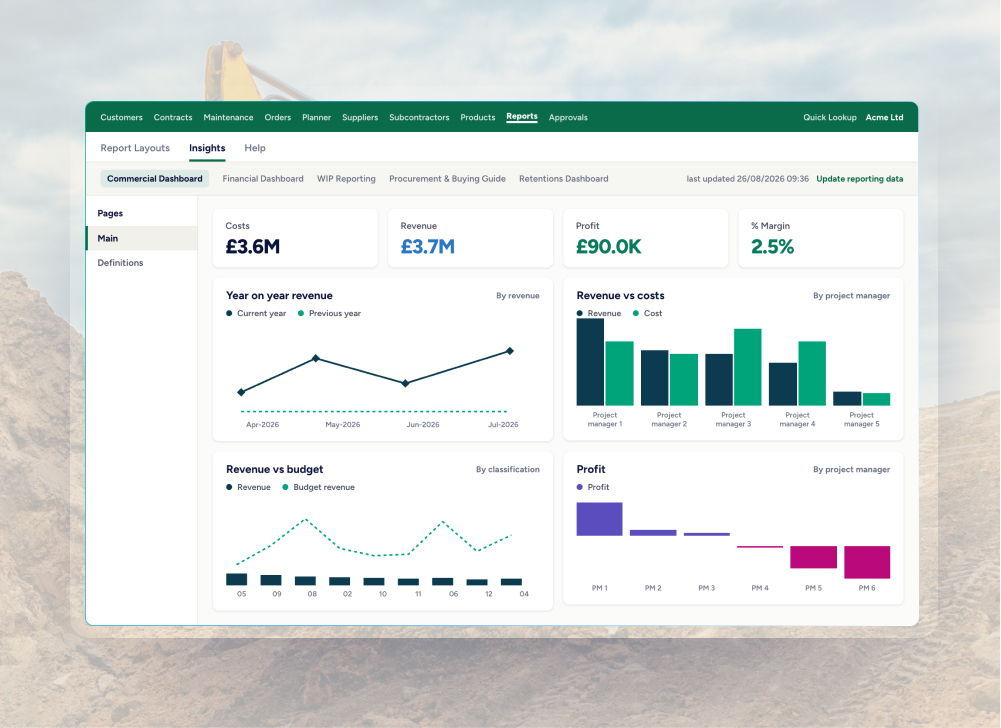
The first area is where construction companies simply do not have the level of controls and visibility they need to be able to track all the moving parts on their projects so they can quickly see every pound going in and out of the business and how this effects the margin on a contract.
For example, below are examples we have seen where money is being wasted every day, and the business is unable to see or stop this until it is too late.
- A medium-sized general contractor were concerned about the speed they were producing applications and didn’t feel they were being chased in a timely manner
- A surprisingly high number of companies are not tracking retentions owed to, or held by the business
- A landscaping contractor forgetting about hired plant sat on-site and incurring overdue fees
- A fit-out company spending extra money on every project rectifying unsatisfactory work completed by a subcontractor, which wanted to start tracking the quality of subbies
Driving efficiencies across the finance and commercial team
The average UK Account Manager who works for a construction company earns £40,000 per year, that’s £3,333 per month, £154 per day or just under £20 an hour.
During our recent online demonstrations, construction companies have reported that roughly 5-10 hours per week are wasted on duplicating figures between their spreadsheets and accounting software whilst checking for discrepancies, per Account Manager.
Therefore, 5 hours a week is £100, 52 weeks in a year means that on average, a construction company wastes over £5,200 per person on duplicating information and performing unneeded processes in spreadsheets.
Depending on how many people you have working on spreadsheets, that number can easily be doubled, tripled and more…
Therefore by implementing construction-specific accounting and commercial management software you can achieve tangible efficiencies, such as:
- Removes the need to duplicate information between systems,
- Reduce the reliance on keeping important information on manual spreadsheets,
- Centralising information so that the relevant people can make proactive decisions to protect margins before it is too late.
As you can see, it really is the case that in the world of construction, spending money on software does generate tangible savings.
It is therefore our job to not only provide great software, but to help customers recognise these savings as quickly as possible.
Over the coming weeks, we will be releasing a number of articles which explore how construction accounting software can save you money and time. These articles will cover:
- Plant Hire
- Applications, Valuations and Retentions
- Subcontractor Management
- Mobile Technology
- Reporting
We’d love to talk you through how our cloud based solutions and dedicated customer onboarding teams help you do that.
To discover how our construction accounting software can benefit you, click here.
To find the right level of software for your business, take our short survey.