

Winning work in construction isn’t getting easier, so companies must become more efficient to survive and prosper.
Being ‘effective’ in construction used to be simple. People shouted at each other. Some heard. Some didn’t. Eventually the message got across.
Now though, after five years of brutally tough trading, most firms realise they must be more efficient to survive. KPMG’s 2013 report of 14 of the UK’s largest contractors found;
‘...a surprising picture of an industry successfully battling the storm over the first years of recession and only finally succumbing to sustained margin erosion from 2010. As a result average margins have remained broadly flat over the last five years.’
If some of the biggest construction brands can only just keep their margins flat, how much tougher is the challenge for SMEs?
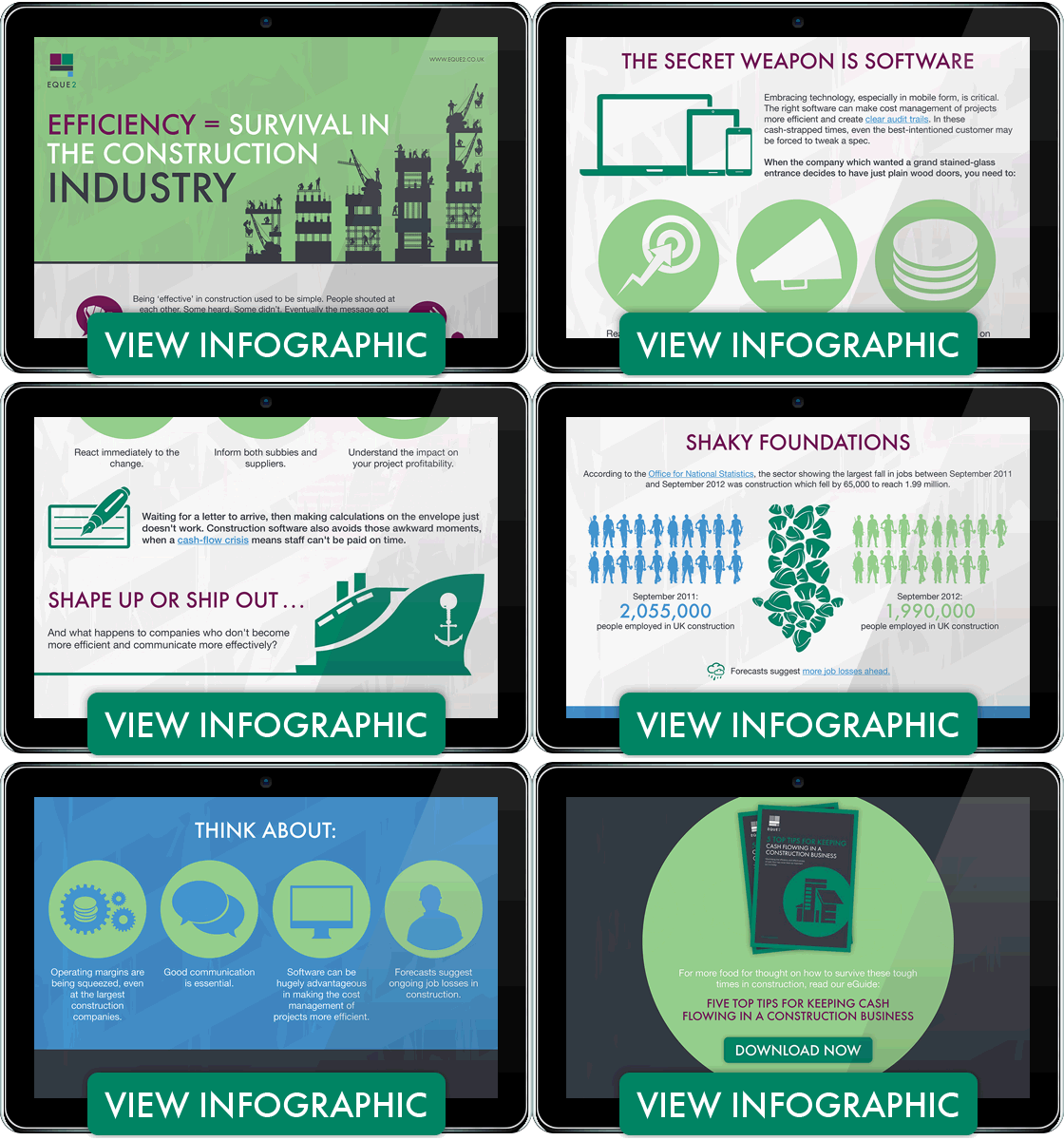
The secret weapon is software
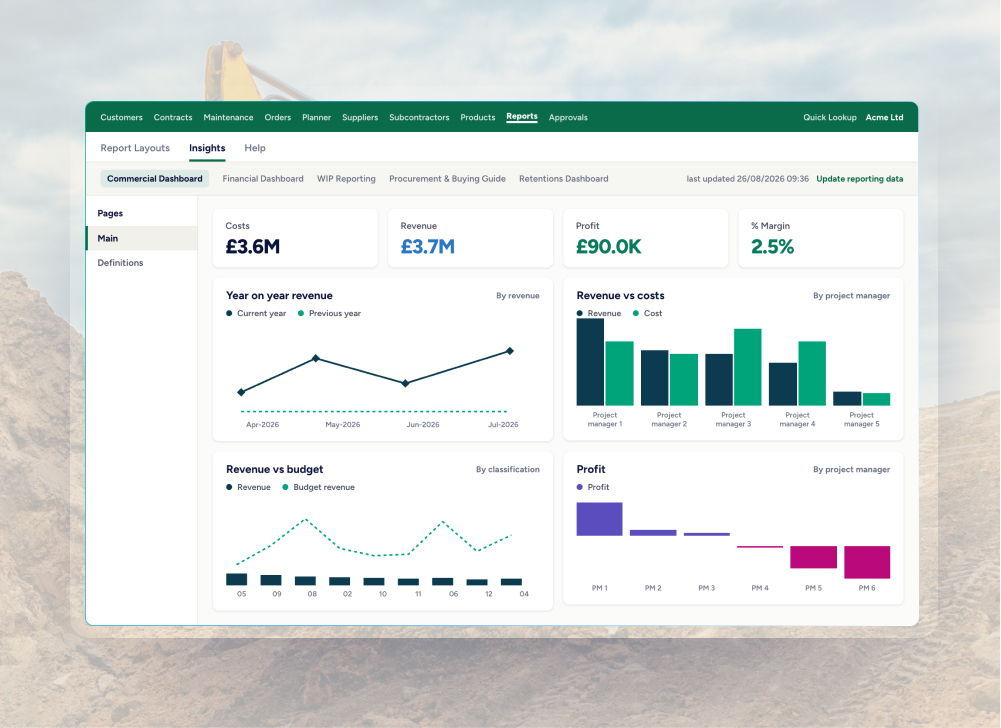
Embracing technology, especially in mobile form, is critical. The right software can make cost management of projects more efficient and create clear audit trails.
In these cash-strapped times, even the best-intentioned customer may be forced to tweak a spec.
When the company which wanted a grand stained-glass entrance decides to have just plain wood doors, you need to:
- React immediately to the change.
- Inform both subbies and suppliers.
- Understand the impact on your project profitability.
Waiting for a letter to arrive, then making calculations on the envelope just doesn't work.
Construction software also avoids those awkward moments, when a cash-flow crisis means staff can't be paid on time.
Shape up or ship out . . .
And what happens to companies who don't become more efficient and communicate more effectively?
Shaky foundations
According to the Office for National Statistics, the sector showing the largest fall in jobs between September 2011 and September 2012 was construction which fell by 65,000 to reach 1.99 million.
September 2011: 2,055,000 people employed in UK construction
September 2012: 1,990,000 people employed in UK construction
Forecasts suggest more job losses ahead. Think about:
- Operating margins are being squeezed, even at the largest construction companies.
- Good communication is essential.
- Software can be hugely advantageous in making the cost management of projects more efficient.
- Forecasts suggest ongoing job losses in construction.