


It’s sad but true that many builders find themselves hanging their heads in despair as the cost of their development runs out of control. But it’s not surprising. Costing a construction project accurately has always been a fine art, and a difficult one, for a number of reasons.

Why is my build costing more?
Construction projects are notoriously complex – which means construction costs follow suit.
Many developments take months, or even years, and are affected by fluctuating prices of everything from materials to labour. The global economy can drive the cost of supplies up or down as demand rises and falls – and currency movements don’t help, either.
So why’s it getting worse?
The number of issues having an impact on construction costs is on the increase, with 5 causes of future cost variance easy to identify. So for construction financial controllers and project managers seeking to control their construction costs, here’s a glimpse of what might be coming your way.
1.Wages on the Up and Up
One of the first signs that the recession was easing was the beginning of a shortage of skilled construction workers. As more buildings went up, more builders were needed – but over the long economic downturn, skills had been lost as work dried up. The result is a continuing shortage of skilled trades, who can now name their price.
The situation may be exacerbated by a new rule that means most skilled migrant workers who remain here for five years will only be allowed settlement – leave to remain – if they earn at least £35,000.
Builder & Engineer magazine reports that the UK Construction Market Survey found 61% of construction professionals have reported sharp wage rises in the sector.
That may ease eventually - the Government has made a commitment of 3 million new apprenticeships starts in England between now and 2020 – but rising labour costs are likely to remain an issue for some time.
2. Rising Material Costs
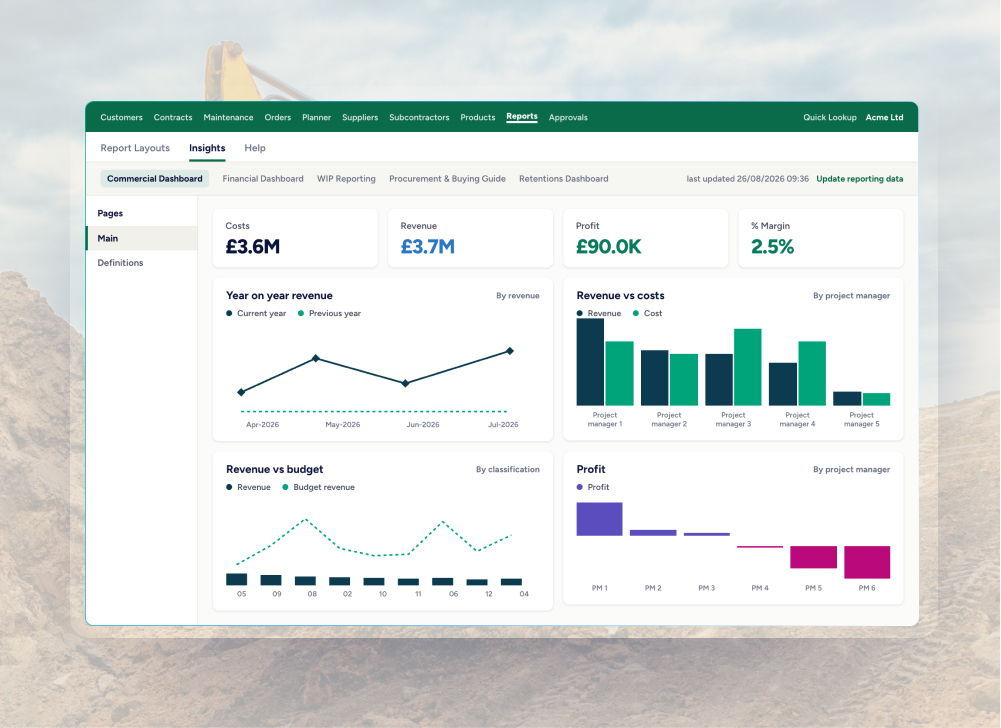
Materials are a global business – even if you’re a local builder – for instance, copper prices rose dramatically during the manufacturing boom in China. But this can be hard to track and predict, even by the experts. GVA’s Construction Outlook Review, published in June 2015, predicted an oil price of $65 – far higher than what happened in reality. This is where good estimating and cost-planning software can really help, providing a solid and logical platform for construction costs planning that can help you ride the global waves.
3. To Comply...
Keeping track of new regulations and legislation is a costly business – red tape adds £2 billion to construction costs (£2,275 per job), according to research by the Forum of Private Business.
That’s the highest cost per employee of any UK sector.
4. Or not to Comply?
As many businesses have found, non-compliance is a no-no, and can end up costing a small fortune. Contractors, clients and designers can be penalised with unlimited fines if they fail to comply with the 2015 Construction (Design and Management) Regulations, for example. See a video here.
Fortunately, good document management can help you keep on top of compliance – improving control and helping cut costs, as well as reducing a lot of hassle.
5. Contractors Push up their Tenders
As demand for construction services continues to rise, a seller’s market is developing. Many contractors are pushing up their prices. In 2015, Mace increased its tender price forecast for the year by 1%, to 4.5% nationally and to 5.5% for London.
The answer to this dilemma is an old one – shop around. Many construction companies track procurement costs carefully and compare contractor tenders; it’s a valuable tactic for reducing construction costs.
No-one has a Crystal Ball
With a complex industry like construction, the future is always flexible and open to influence from many elements. Be prepared, though, and the impact on your business can be controlled and even turned to your advantage.
It’s not quite a crystal ball, but it can help keep the shine on your business.
TAKEAWAYS
- Labour costs are going up – 61% of construction professionals have reported sharp wage rises in the sector.
- Material costs are just one of the outside factors that affect construction costs – but you can be prepared.
- Compliance issues could be adding £2,275 to every one of your construction projects.
- Failure to comply with regulations is increasingly landing construction firms with unlimited fines.
- Tenders are becoming a seller’s market, but good procurement practice can help control costs.