


Create a more organised workforce by joining up disparate construction data
As June began, it seemed the uncertain recovery of the construction industry had blossomed into a full-scale boom.
A buoyant analysis of the uprated GDP figures for Q1 2015 suggested that construction output had fallen by just 0.2%, rather than the previous estimate of minus 1.2%.
News that the sector's output has fallen by a dramatic 0.8% in April was put down to pre-election uncertainty. Post-election, belief that all is well has strengthened.
Always look behind the headlines
Despite the uplifted sentiment within the industry, the latest news from some of the biggest names in construction tells a rather different story.
- Morgan Sindall warned of an exceptional charge of £35 million in its half-year results to the end of June. This resulted from ongoing wrangles with the Ministry of Defence over two contracts at the Faslane naval base.
- The UK arm of BAM Construct unveiled earnings down a whopping £40 million despite higher turnover. Chief executive Graham Cash also admitted that profit margins were running at just 0.8%.
The importance of a good construction management system
Some of the larger construction companies who would be expected to be leading the sector forward still suffer from significant internal issues that impact cash flow, supply chains and visibility of construction data.
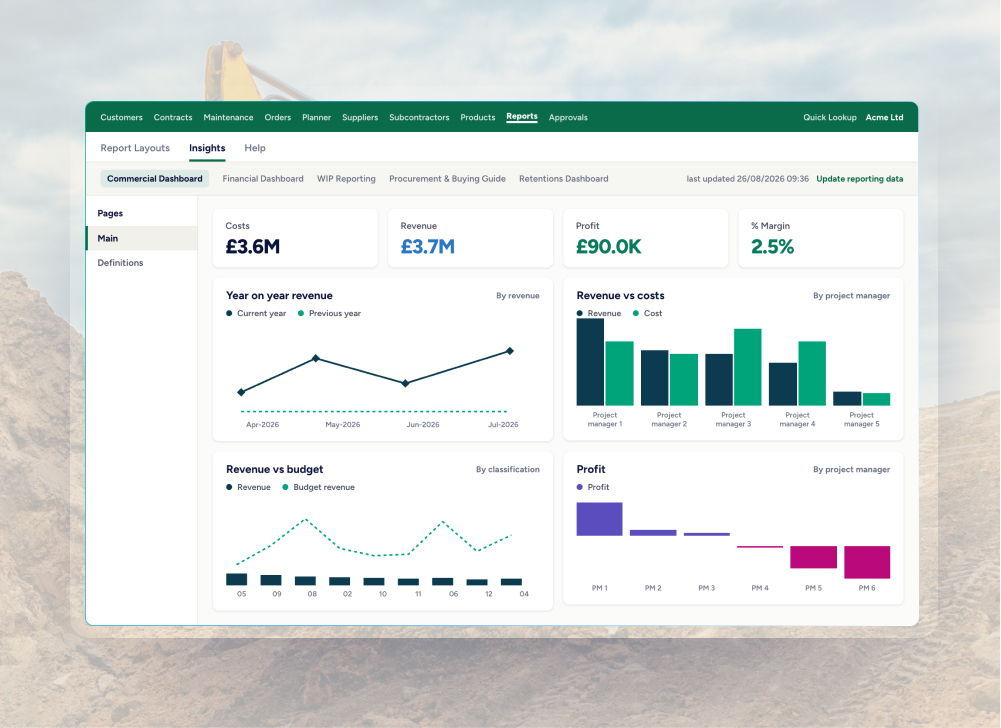
By having full visibility of their construction data, larger companies would be able to clearly forecast their coming quarter, prepare for potential high turnovers and be able to work more effectively within tight profit margins.
Of course, the forecasts and reports created are only as accurate as the data that employees put in, so companies both large and small must prioritise this.
Differences for small-medium businesses
Larger companies can overcome challenges such as inaccurate, duplicated, data as well as disparate information or systems by upgrading their software. For SMEs who do not have such financial flexibility, however, they must adopt a different approach.
SMEs should update their existing systems while simultaneously using digital technology more effectively if they want to get the most from construction data. This avoids heavy investments that create large overheads, relieving SMEs of concerns surrounding tight profit margins.
Benefits of capitalising on existing systems.
Eliminating silos of information from their business system is at the heart of this cost-effective approach. By boosting collaboration and enabling employees to place all of their accurate data in one central repository, your workforce will become more organised. In turn, this will improve the success of your construction projects.
Smaller businesses can capitalise on their existing systems by adding on the use of modern technology to improve construction data, including:
- Devices that aid remote and flexible working, providing employees ease of access to input and retrieve data
- Collaborative apps, such as Facetime, that boost communication
- A Bring Your Own Device policy, enabling employees to input to the system in a way that suits them best.
Takeaways:
- Update your current systems with modern technology add ons
- Remove silos and duplicate data to help your workforce become more organised
- Encourage collaboration towards one single data repository