

HMRC has published draft proposals for the Construction Industry Scheme (CIS), described as “the toughest shake-up of the scheme in two decades.” The reforms are aimed at stopping supply-chain fraud and will directly impact construction companies, subcontractors, and company directors, who will now carry personal responsibility for compliance.
As reported by Construction Enquirer*, the proposed measures show HMRC’s intention to go much further in tackling organised CIS fraud and “too good to be true” operators in the construction supply chain.
For construction businesses, this isn’t just a compliance update; it’s a wake-up call. Generic accounting tools like Sage, Xero, or QuickBooks may calculate and submit CIS correctly, but they cannot protect your business or directors from personal liability if subcontractors in your supply chain are involved in fraud.
Read on to learn how you can stay compliant, track subcontractors, and demonstrate due diligence with the right construction accounting and compliance solution.

HMRC Changes That Could Impact Your Business
The measures outlined above were proposed in the Autumn Budget on 26 November 2025*, where Chancellor Rachel Reeves announced further action to tackle tax fraud across complex supply chains.
As part of the Budget, the government outlined proposed significant changes to the Construction Industry Scheme (CIS), expected to take effect from April 2026. These reforms shift HMRC’s focus from simply checking CIS submissions to assessing whether construction businesses had proper oversight and controls across their subcontractor supply chains — if adopted.
The key changes include:
1. Directors Could Face Personal Penalties
“Under the proposals, directors could face personal penalties as HMRC shifts responsibility to the top of the chain.”
If the proposals are adopted, directors would carry personal responsibility for compliance. If a subcontractor in the supply chain engages in fraud, or if the company fails to act on obvious red flags, HMRC could impose penalties directly on the directors.
2. Gross Payment Status (GPS) Can Be Removed under Proposed Rules
“From April 2026, if adopted, any business judged to have known or should have known it was tied to fraudulent transactions could instantly lose their gross payment status for at least five years.”
Losing GPS under the proposed rules could have serious consequences for credibility with clients and subcontractors.
3. Your Business Could Be Liable for Subcontractor Fraud
“Companies engaging with fraudulent labour suppliers will become automatically liable for the lost tax, with penalties of up to 30% of the evaded amount hitting both the business and its directors or connected individuals.”
Businesses can no longer claim ignorance — HMRC would expect clear evidence of oversight.
4. Red Flags HMRC Will Watch Closely
The crackdown targets not only deliberate fraud but also companies that fail to maintain proper controls or ignore warning signs. Only “those who willfully engage with fraudulent operators or ignore glaring red flags will be caught by the rules,” but the expectation is that all businesses demonstrate due diligence.
The Implications: Where Standard Accounting Platforms Fall Short
Many construction businesses rely on the functionality in accounting software like Sage, Xero, or QuickBooks to cover basic CIS administration, such as:
- CIS verifications with automated tax deductions
- Generating and submitting CIS returns online
- Tracking submission logs of CIS returns
- Producing payment statements
However, these platforms stop short of providing the level of visibility and auditability required under the proposed HMRC rules.
The draft proposals place a clear expectation on businesses to demonstrate due diligence and maintain full audit trails. To comply, companies would also need to:
- Maintain detailed audit trails for every order, payment, and certificate
- Record subcontractor skill sets, regions, and capabilities
- Keep time/date/user-stamped notes for all interactions
- Store and track all required documents — IDs, CSCS cards, training certificates, Health & Safety records, Ts & Cs, and insurance policies
- Allocate subcontractors to jobs with agreed deductions and retention rates
- Receive automated alerts for expired or missing insurance
Without these additional capabilities, HMRC could argue a business “should have known” about fraudulent activity in its supply chain, even if the CIS returns themselves were submitted correctly — a risk highlighted in a recent Construction Enquirer article.

Why A Full Construction Accounting Solution Is Essential
Meeting HMRC’s proposed expectations requires more than basic CIS calculations. A full construction accounting solution provides oversight, compliance, and fraud prevention across every subcontractor and job.
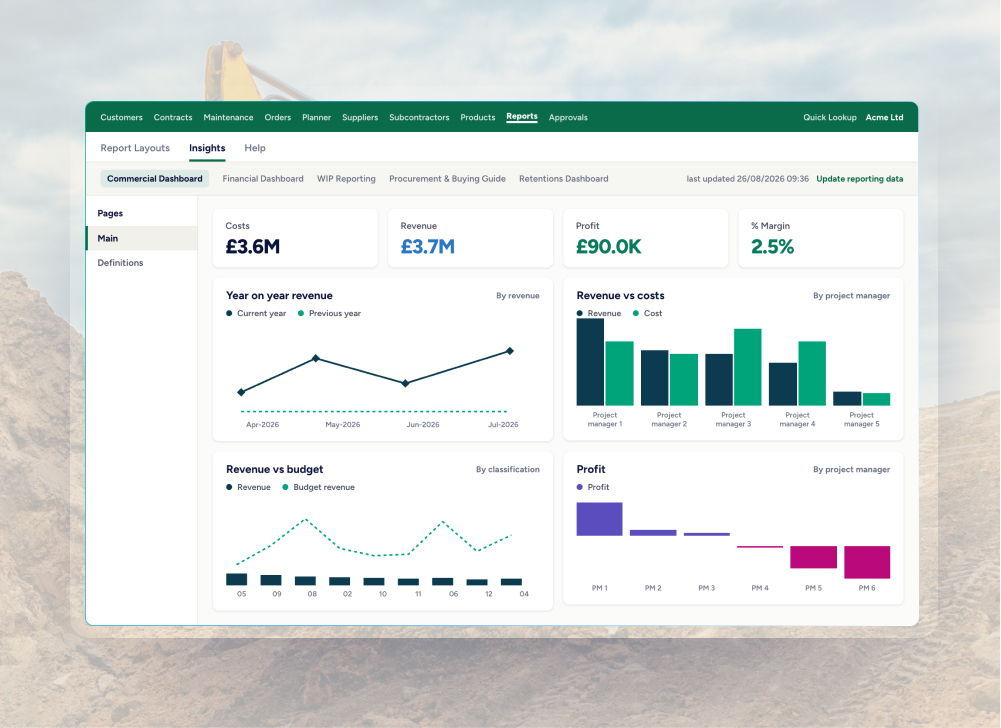
Construction accounting software such as Eque2’s Construct, integrated with Xero, Sage 50, Sage 200, and Sage Intacct, can help construction businesses to demonstrate due diligence and maintain appropriate oversight, reducing the risk of HMRC penalties and protecting directors from personal liability.
Gain Complete Subcontractor Oversight
- Full audit trails of orders, worksheets, applications, payment certificates
- Document storage for IDs, CSCS cards, training certificates, Ts & Cs, H&S docs
- Time/date/user-stamped notes for every action
- Skillset, capability and region tracking
- Allocation to jobs with clear deduction agreements (e.g. retention)
See Construct subcontractor worksheets and payment certificates in practice
Ensure Every CIS Submission Is Accurate
- HMRC CIS verifications with automated tax deductions
- Online CIS return generation and submission
- Complete submission log history for all returns
- Automated reverse-charge tax code enforcement to prevent mispostings
- Payment statements emailed directly to subcontractors
Watch a demo to discover how Construct supports subcontractor management and CIS compliance.
Stop Fraud Before It Impacts Your Business
- Insurance tracking with proactive alerts for expired or missing policies
- Accurate recording of subcontractor costs at job level
- Full auditability of every action and payment
See Construct in full — Personalise your demo — the complete construction accounting solution
Take Control of CIS Compliance Today
As HMRC tightens CIS rules and shifts responsibility up the supply chain, construction businesses need more than accurate calculations and timely submissions. They need clear visibility, evidence of oversight, and the ability to demonstrate due diligence across every subcontractor and job.
When supported by the right construction accounting software, a comprehensive approach to compliance brings CIS, subcontractor management, and auditability together, helping businesses meet HMRC’s expectations if the new rules are adopted.
Don’t Miss Our Webinar: Stay ahead of HMRC’s proposed CIS reforms in 2026. Join us to learn practical strategies for contractor compliance, subcontractor oversight, and protecting directors from personal liability. [Register here] to secure your spot!

Contact us: 📞 01628 702702 | ✉️ construction@eque2.com